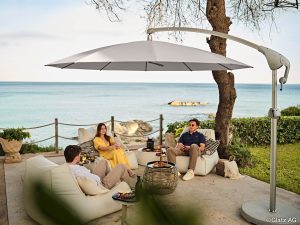
Awnings come into their own with the arrival of fine weather. Installed on patios or in gardens, they are an excellent way to enjoy outdoor spaces whilst keeping out the excessive heat.
However, to function properly, awnings require regular maintenance. It is important to bear in mind a number of guidelines and recommendations to help keep them in good condition, thereby extending their lifespan.
Tips for cleaning and maintaining an awning
Cleaning an awning is not a difficult task. However, it requires consistency and care. To keep an awning in perfect condition, it is recommended that you give it a thorough clean at the start of each season. Take note of these guidelines to find out how to do it!
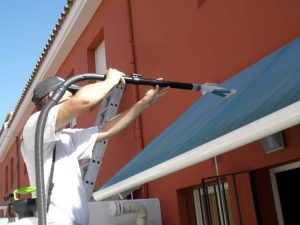
- Awnings are usually retracted for most of the winter. This prevents wear and tear on the fabric, but not environmental pollution – its worst enemy. Therefore, the first step in getting your awning ready is to remove any accumulated dust using a soft brush or a vacuum cleaner.
- Next, using a mild, neutral soapy solution—and avoiding high-pressure water—gently scrub both sides of the awning and rinse. During cleaning, do not use detergents or harsh products that could damage the fabric and compromise properties such as waterproofing. At this stage, it is always advisable to follow the manufacturer’s instructions.
- It is important to allow the awning fabric to dry completely before rolling it up to prevent mould from forming on its surface. Whilst it is unfolded, you should also take the opportunity to clean the mechanism, whether it is manual or automatic.
- Once the awning has dried, you can apply a sealant to protect its properties.
Different fabrics
Following a general recommendation, Corradi, one of our specialist distributors in outdoor décor, offers a series of specific guidelines to keep every type of fabric looking as good as new.
- Acrylic: use a white brush to go over the surface before washing it with warm water and mild soap. Then rinse thoroughly and allow the awning to dry naturally.
- Polyester: cleaning is carried out in the same way as for acrylic fabric, using a soft brush, warm water and mild soap.
- Soltis 86 and Soltis W96 fabrics: it is recommended to use a damp cloth or brush, or a low-pressure pressure washer with cold water. In this case, the only permitted solvent is alcohol (1 litre diluted in 10 litres of water).